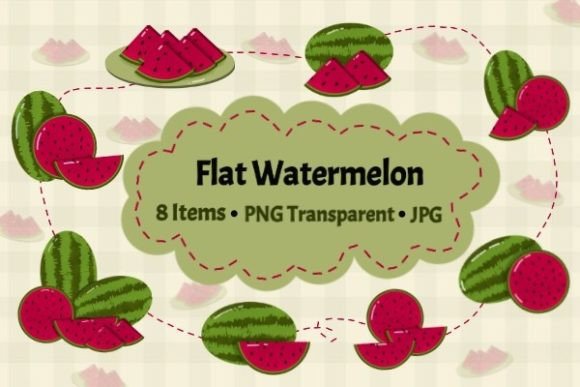
Flat Watermelon Illustration
A flat watermelon illustration is a simple, stylized graphic that captures the essence of a watermelon without the complexity of realistic textures or shading. This type of design is typically two-dimensional, using clean lines and solid colors to create a visually appealing yet easy-to-use image. The flat watermelon illustration is versatile and can be adapted for various purposes, making it a valuable asset for designers, creators, and businesses looking for a quick and effective visual element.
Why Different Audiences Care About Flat Watermelon Illustration
The appeal of a flat watermelon illustration varies depending on the user's role and goals. For instance, a beginner designer might see it as an accessible way to start experimenting with digital art. A small business owner may value it for its affordability and adaptability in branding. Meanwhile, a professional graphic designer could use it as a base for more complex projects or as part of a larger design system.
Beginners: A Gateway to Digital Design
For beginners, a flat watermelon illustration offers a low barrier to entry. It requires minimal technical skills and can be used to practice basic design principles like color theory, composition, and typography. Beginners often look for resources that are easy to understand and apply, and a flat watermelon illustration fits this need perfectly.
- Practical example: A student learning about vector graphics can use the flat watermelon as a practice file to learn how to manipulate shapes and colors.
- Priority: Ease of use and learning value.
Professionals: Versatility in Design Systems
Professionals may use a flat watermelon illustration as part of a larger design system or brand identity. Its simplicity allows for easy integration into logos, icons, and other visual elements. Professionals often prioritize consistency and scalability when choosing design assets, and a flat watermelon illustration can support these needs effectively.
- Practical example: A branding agency might use the flat watermelon as a recurring symbol across different marketing materials to maintain brand coherence.
- Priority: Flexibility and commercial value.
Creators and Entrepreneurs: Creative Freedom and Branding
Creators and entrepreneurs often seek unique and customizable visuals to stand out in competitive markets. A flat watermelon illustration provides a creative foundation that can be modified and repurposed to suit different projects. This makes it ideal for those who want to maintain a consistent aesthetic while allowing for personalization.
- Practical example: An online store selling summer-themed products could use the flat watermelon as a key visual element in their website design and product packaging.
- Priority: Creativity and long-term usefulness.
Marketers and Bloggers: Visual Content for Engagement
Marketers and bloggers rely on engaging visuals to capture audience attention. A flat watermelon illustration can serve as a versatile tool for creating content that is both eye-catching and easy to edit. Its simplicity ensures that it remains relevant across different platforms and formats.
- Practical example: A lifestyle blogger could use the flat watermelon in a post about healthy eating or summer activities to add a playful touch.
- Priority: Presentation and speed.
Educators and Hobbyists: Learning and Enjoyment
For educators and hobbyists, a flat watermelon illustration can be a fun and educational resource. It can be used in teaching design fundamentals or as a creative activity for children. The simplicity of the illustration allows for easy modification, making it a great tool for hands-on learning and experimentation.
- Practical example: A teacher might use the flat watermelon as part of a lesson on color mixing or shape recognition in a classroom setting.
- Priority: Learning value and enjoyment.
Choosing the Right Format: PNG vs. JPG
The choice between PNG and JPG formats depends on the intended use of the flat watermelon illustration. PNG files are ideal for designs that require transparency, such as stickers or overlays, while JPG files are better suited for printed materials or web backgrounds due to their higher compression rate.
- PNG: Best for digital projects that require transparency, such as patterns, stickers, and wall art.
- JPG: Suitable for high-quality prints or background images where transparency is not needed.
Quality and Resolution: 350 DPI Matters
The inclusion of 350 DPI files ensures that the flat watermelon illustration maintains high quality even when scaled up. This is particularly important for print projects where clarity and detail are essential. Whether you're using the illustration for a digital campaign or a physical product, the resolution will impact the overall professionalism of your work.
Who Benefits Most from High-Resolution Files?
Business owners and professionals who plan to use the illustration in print media or large-scale projects will benefit most from the 350 DPI files. These users prioritize reliability and quality, knowing that a high-resolution image will reflect well on their brand and project outcomes.
Conclusion
A flat watermelon illustration is more than just a simple graphic—it's a versatile and adaptable asset that can meet the needs of a wide range of users. From beginners exploring design to professionals building brand identities, the flat watermelon illustration offers something for everyone. By understanding the different priorities and uses, you can determine whether this illustration aligns with your goals and enhances your creative process.